



























Blog
Blog > Best Gravel for Driveways in Norfolk: A Complete Guide
Best Gravel for Driveways in Norfolk: A Complete Guide
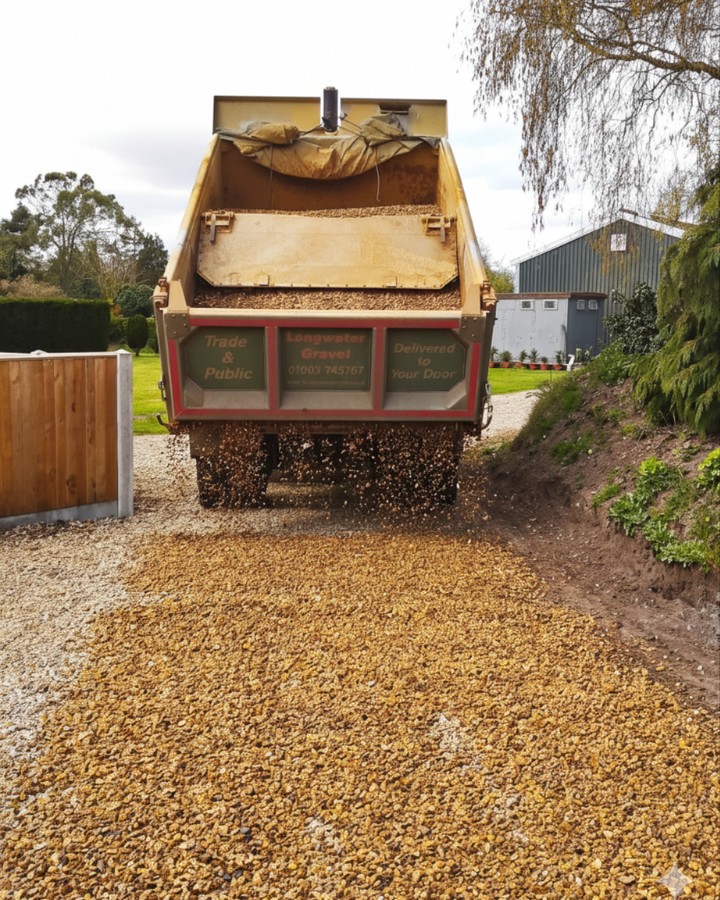
Thinking about replacing your driveway? Gravel is one of the most practical surfaces you can choose, but which stone you pick, and how it’s laid, decides whether it still looks good in five years or needs re-raking every few months. This guide covers what makes a good driveway gravel, how the main options compare, how deep to lay it, and whether you’ll need planning permission.
What Makes a Good Driveway Gravel
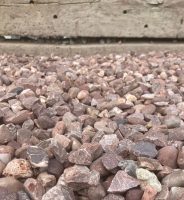
Not every decorative stone is built for daily vehicle traffic. Two things matter more than anything else. First, size: 14–20mm stone is the standard for driveways, since anything under 10mm tends to lodge in tyre tread and end up scattered across paths and pavements. Second, shape: angular, crushed stone locks together under the weight of a car and resists rutting, where smooth, rounded stone just shifts and displaces instead. Get either of those wrong and you’ll be topping up and raking the surface far more often than you’d like.
Comparing the Best Options
For most Norfolk driveways, Black Ice (20mm) is the go-to choice: a blend of black, grey, and white tones in a driveway-suited 20mm size, delivered in 800kg bulk bags or available loose. Cotswold Stone (20mm) is the main alternative if you want a lighter, warmer tone instead of a dark stone. It’s a limestone-based aggregate in the same size, so it performs the same way underfoot; it just reads differently against a lighter-brick or render property. Finer stone like pea gravel isn’t built for the main wheel-tracked surface; it’s better kept to paths and borders running alongside the driveway rather than the driveway itself.
How Much Sub-Base and Gravel Do You Need?
A gravel driveway is built in layers, and the depths are what stop it sinking or rutting over time. Start with 100–150mm of compacted Type 1 sub-base, a graded aggregate running from dust up to roughly 40mm, for anything that’ll carry car traffic. Next comes a geotextile membrane between the sub-base and the gravel, which stops the two layers mixing together and helps suppress weeds coming through. On top of that, a 40–50mm layer of 20mm gravel is the standard finish: enough to fully cover the membrane without feeling loose or soft underfoot. Skipping the sub-base, or laying it too thin, is the single most common reason a gravel driveway fails early. If you’re not sure how much you’ll need for either layer, our gravel calculator will work it out from your driveway’s dimensions.
Do You Need Planning Permission?
For most front-garden driveways, no. Since 2008, planning permission has only been required for a new or replacement front-garden driveway over 5 square metres if it uses an impermeable surface, such as solid concrete or standard tarmac, that drains straight onto the road. Gravel is classed as permeable, so it falls outside that rule entirely, regardless of size, as confirmed by the Planning Portal’s official guidance on paving front gardens. The same exemption applies to impermeable surfaces too, as long as the rainwater is directed to a lawn, border, or soakaway on the property rather than to the road.
Five square metres isn’t much (roughly the size of a single parking space), so most full-width driveways fall under this rule in practice. If your property is listed or sits in a conservation area, it’s worth a quick check with your local planning authority, as different restrictions can apply there.
Bulk Bags or Loose Loads?
We supply driveway gravel both ways. Bulk bags (roughly 800kg each) suit smaller driveways or tighter access, and they’re easy to store until you’re ready to lay. Loose loads work out more cost-effective for larger driveways, delivered direct by our fleet, which ranges from 7.5 to 20-tonne vehicles. There’s no minimum order if you’re collecting from our yard, and a 1-tonne minimum on delivery.
Ready to Order?
We’ve been a family-run aggregate business since 1952, quarrying our own stone rather than buying it in, so what you’re getting hasn’t passed through several hands before it reaches you. Call us on 01603 743767 and the team can help you work out quantities and talk through which stone suits your project, whether it’s a full driveway replacement or topping up an existing surface.